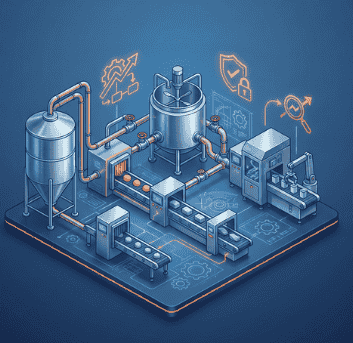
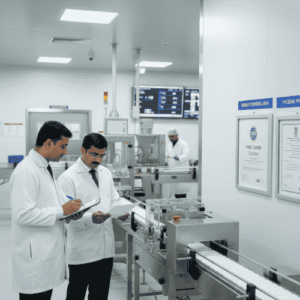
Setting up a food manufacturing facility in India involves multiple technical and financial decisions. While product formulation and market strategy often get the most attention, project planning has an equally strong impact on total investment. Many cost overruns in food projects are not accidental—they stem from early-stage design choices that are difficult to reverse later.
Where Food Projects Commonly Overspend
In Indian food processing projects, overspending usually appears in predictable areas:
Machinery selection:
Equipment is often chosen based on future ambition rather than present demand. Higher-capacity or imported machines increase capital cost, energy usage, and maintenance expenses while remaining underutilised in the initial years.
Factory layout planning:
Without a process-driven layout, plants face longer material movement, higher labour dependency, and hygiene risks. Correcting layout issues after construction often requires additional civil and shutdown costs.
Utility system sizing:
Utilities such as steam, refrigeration, compressed air, and electrical loads are frequently designed with excessive safety margins. This results in higher installation cost and avoidable monthly operating expenses.
Role of Consultants in Cost Rationalisation
A Food Processing Consultant in India typically works at the planning and design stage, where cost control is most effective.
Production capacity is assessed using realistic demand and scalability assumptions
Layouts are developed to support smooth process flow and regulatory requirements
Utilities are designed according to actual process loads instead of theoretical values
Equipment specifications are aligned with product type, batch size, and operating hours
Statutory requirements are considered early to reduce compliance-related changes
This approach focuses on preventing inefficiencies rather than correcting them later.
Practical India-Based Observations
Across different food segments, similar patterns are seen:
Plants planned in phases often achieve lower initial capital deployment.
Process redesign helps eliminate duplicate heating or chilling steps.
Early integration of fire and pollution norms reduces civil modification during commissioning.
These outcomes are based on project structuring rather than cost-cutting alone.
Long-Term Impact of Early Planning
Engaging a Food Processing Consultant in India at the concept or feasibility stage generally leads to better cost visibility and fewer execution surprises. While immediate savings vary by project type, the long-term benefits are seen in smoother commissioning, predictable operating costs, and improved plant efficiency.
In food manufacturing, disciplined planning plays a significant role in controlling investment and supporting sustainable operations—without relying on corrective measures later.